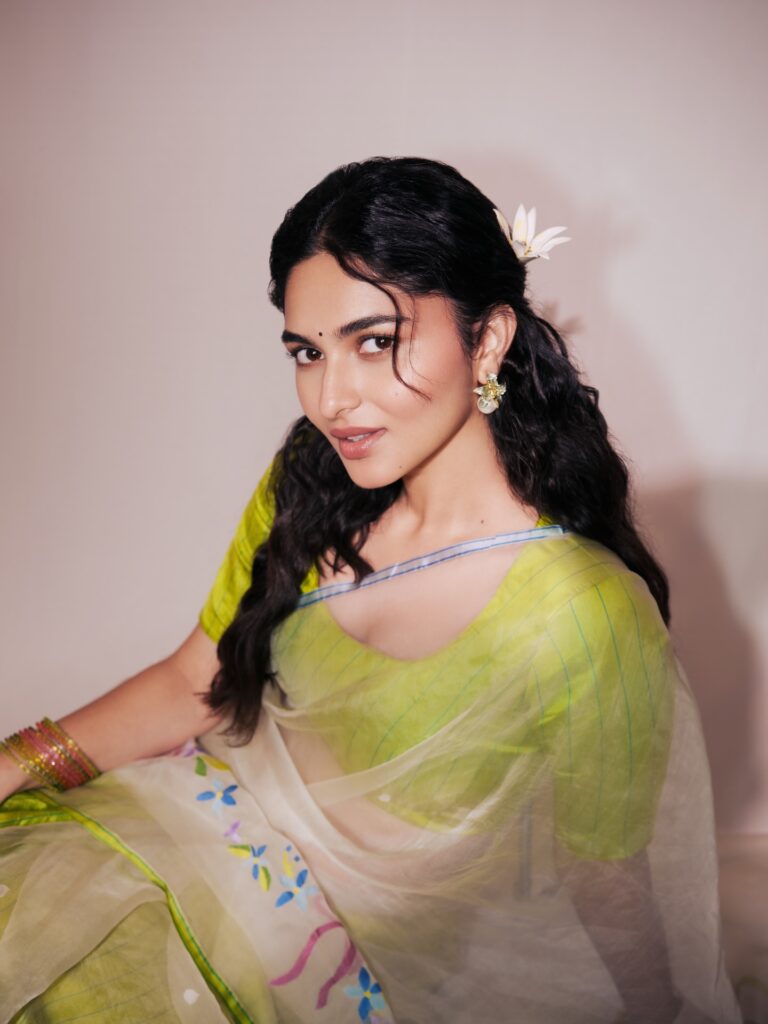
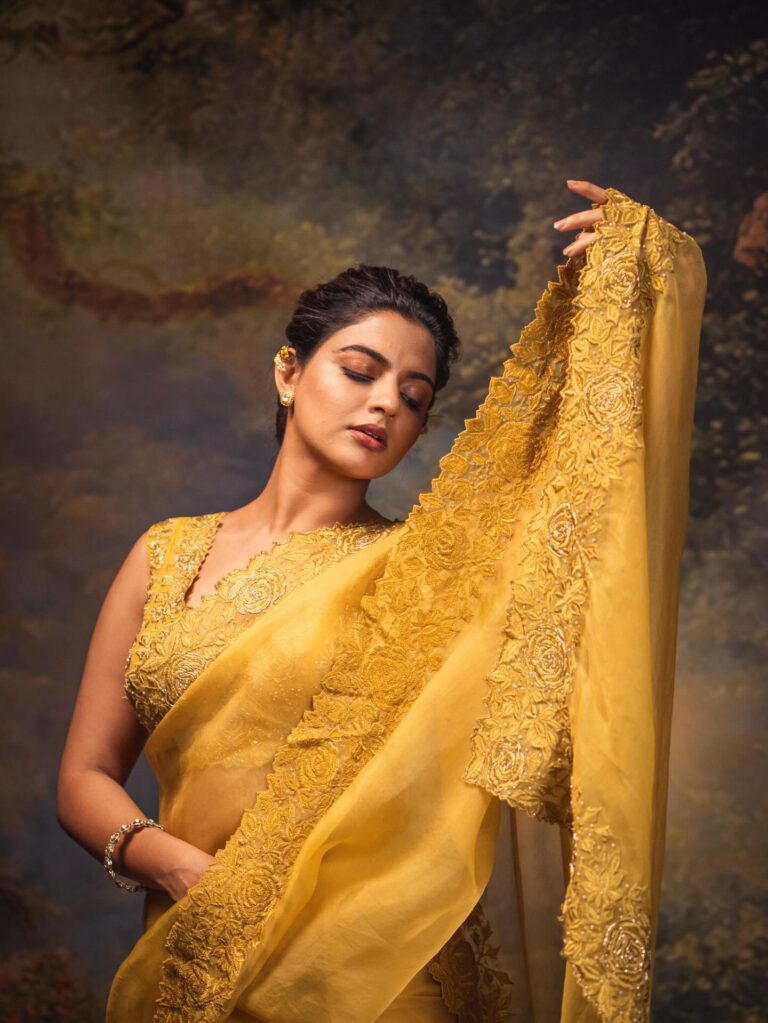
The Gujarati saree, distinguished by its seedha pallu style, is draped with the decorative end of the saree in front. To drape it, start by tucking the saree at the waist, wrap it around once, make front pleats, bring the pallu from back to front, and secure it neatly on the shoulder. Lightweight fabrics such as chiffon or georgette are easiest for beginners.
Wearing a Gujarati saree is a timeless way to celebrate Indian culture while making a stylish statement at weddings, festivals, and traditional ceremonies. At WeaverStory, our handwoven sarees are crafted to enhance the elegance of the seedha pallu drape, making the draping process smoother and highlighting the artistry of the fabric. Learning how to wear Gujarati saree may seem challenging at first, but with clear step-by-step guidance, anyone can achieve this sophisticated look. In this article, we will provide detailed instructions, styling tips, and expert advice to help you master this beautiful saree draping style.
What is a Gujarati Style Saree?
A Gujarati saree is unique because of its seedha pallu, where the pallu, or the decorative end of the saree, is draped over the front rather than the back. This allows the intricate embroidery, Bandhani patterns, or silk motifs to be displayed prominently, making it ideal for festive occasions and traditional ceremonies.
Key points about Gujarati saree style:
-
The pallu falls across the front of the torso, showcasing designs
-
It is different from the Nivi style, where the pallu falls over the back
-
It is popular for weddings, festivals, and cultural celebrations
-
The style allows for elaborate jewelry and accessories to complement the saree
- It is moderately easy to drape with practice, especially using lighter fabrics
When to Wear Gujarati Saree
The Gujarati saree is suitable for many occasions where tradition and elegance are important. These include:
-
Weddings, including both bridal draping and guest attire
-
Festive events such as Navratri and Diwali
-
Religious and cultural ceremonies
-
Family gatherings or formal celebrations that highlight traditional Indian attire
This style ensures that the saree’s decorative elements are visible, allowing the wearer to fully showcase the craftsmanship of the fabric.
What You Need Before Draping a Gujarati Saree
Before you begin learning how to wear Gujarati saree, gather the following items:
-
A saree, preferably lightweight for easier draping; fabrics like chiffon, georgette, or soft silk work best for beginners
-
A well-fitted blouse provides comfort and enhances the overall look
-
A petticoat matching the saree and tied securely at the waist
-
Safety pins to secure pleats and the pallu in place
-
Comfortable footwear, such as heels or flats, to help the saree fall correctly and maintain balance
Best fabrics for Gujarati draping:
-
Bandhani sarees, for traditional festive occasions
-
Patola sarees, perfect for weddings and formal events
-
Georgette or chiffon sarees for beginners learning the drape
- Silk sarees are ideal for luxurious occasions and elaborate designs
How to Wear Gujarati Saree: Step-by-Step Guide
Mastering how to wear Gujarati saree requires careful attention to each step. Here is a detailed guide for beginners:
Step 1: Tuck and Start at the Right Side
Start draping at the right hip. Tuck the saree into the petticoat, ensuring that the lower edge touches the floor. This provides a foundation for an even and elegant fall.
Step 2: Wrap Around Once
Wrap the saree around your waist fully once, keeping the fabric snug but not too tight. This ensures stability and proper alignment.
Step 3: Create Front Pleats
Form 5 to 7 neat pleats approximately five inches wide. Make sure they are even and straight. Proper pleating is key to a polished look.
Step 4: Secure Pleats Neatly
Tuck the pleats slightly left of the navel and use a safety pin if needed. This helps maintain symmetry and prevents the saree from slipping.
Step 5: Bring the Pallu from Back to Front
Bring the decorative pallu from the back over your left shoulder and spread it across the front of your torso.
Step 6: Spread the Pallu Across the Torso
Arrange the pallu evenly so it covers the chest beautifully, displaying the design clearly.
Step 7: Pin the Pallu on the Shoulder
Use a safety pin to secure the pallu on your shoulder, keeping it stable throughout movement.
Step 8: Adjust Length and Flow
Adjust the pallu length so that it falls elegantly, typically reaching the mid-thigh or knee area.
Step 9: Final Pleat Adjustments
Check both the pleats at the waist and the pallu pleats, making sure they are straight and symmetrical.
Step 10: Secure with Pins
Pin the pleats discreetly on the petticoat to prevent slipping during long events or dances.
Step 11: Finishing Touches
Adjust folds for neatness, ensure the hemline reaches the floor, and make final adjustments for comfort and elegance.
Pro tips:
-
Avoid over-pinning, which can restrict movement
-
Practice with lighter fabrics before attempting heavier silks
- Keep the saree’s design and patterns visible to maximize visual impact
Common Mistakes to Avoid While Draping a Gujarati Saree
To maintain the elegance of a Gujarati saree, avoid these common mistakes:
-
Uneven pleats at the waist, which affect balance and fall
-
Incorrect pallu length, which can make the saree look awkward
-
Over-pinning or under-pinning, causing the saree to slip or appear stiff
- Using very heavy fabric as a beginner, which makes draping difficult
Styling Tips to Elevate Your Gujarati Saree Look
Enhance the beauty of your Gujarati saree with careful styling:
-
Pair with traditional jewelry such as chokers, bangles, and maang tikka
-
Choose footwear like heels or embroidered flats that complement the saree’s elegance
-
Opt for hairstyles that enhance the pallu, including braids, buns, or soft waves
Modern vs Traditional Styling:
-
Modern styling includes minimal jewelry, a belted saree look, and pastel color palettes
- Traditional styling emphasizes elaborate embroidery, colorful patterns, and statement accessories
Why Gujarati Draping Works Beautifully with Handwoven Sarees
Handwoven sarees are perfect for the Gujarati style because:
-
The front pallu prominently showcases intricate weaving and embroidery
-
They highlight craftsmanship and traditional patterns
-
They celebrate India’s rich textile heritage
-
They enhance the elegance of festivals, weddings, and cultural ceremonies
At WeaverStory, each saree, including Chanderi, Baluchari, Kanjivaram and Madhubani silk sarees is crafted to ensure that the seedha pallu drape is both elegant and comfortable for wearers of all experience levels.
Expert Draping Tips from WeaverStory
-
Handle delicate fabrics carefully to prevent tearing or slipping
-
Keep pleats slightly loose to maintain a natural and graceful flow
-
Practice draping before long events to gain confidence
- Use minimal pins for a soft, flowing drape
Discover the Perfect Saree for Gujarati Draping
Whether you’re dressing for a festive celebration, a wedding, or a special occasion, the elegance of a Gujarati saree lies in both its drape and its craftsmanship. At WeaverStory, we offer a thoughtfully curated selection of handwoven sarees, each piece reflecting India’s rich textile heritage and designed to enhance the beauty of the seedha pallu style.
Explore our collections like Banarasi georgette sarees, bridal Banarasi sarees, and hand-batik pure mulberry silk sarees today and find a saree that not only drapes beautifully but tells a story worth wearing.
FAQs
Q1. How do I drape a Gujarati saree for beginners?
Begin with a lightweight saree, tuck it into the petticoat, wrap it around once, create neat front pleats, bring the pallu from back to front, and secure it on the shoulder with pins. Practice helps achieve precision.
Q2. Can I wear Gujarati saree without safety pins?
Yes, with lightweight fabrics like chiffon or georgette, careful pleating can hold the drape without pins, although pins are recommended for stability in heavier fabrics.
Q3. Is Gujarati saree style suitable for all body types?
Absolutely. The front pallu drape can be adjusted to flatter any body type, and pleat placement can emphasize curves or streamline the silhouette.
Q4. Will the saree stay in place during long events?
Proper pleating, secure tucking, and strategic pinning ensure the saree remains in place throughout weddings, festivals, and ceremonies.
Q5. What fabric is easiest to drape for Gujarati style?
Chiffon, georgette, or soft silk sarees are beginner-friendly because they are light and easy to fold and pin.
Q6. Why is seedha pallu preferred for festive occasions?
It prominently showcases the saree’s intricate designs, embroidery, and colors, making it ideal for cultural events, weddings, and celebrations.
Q7. How long does it take to drape a Gujarati saree?
For beginners, 10–15 minutes is common. With practice, it can be done in 5–7 minutes while maintaining elegance.
Q8. Can I style Gujarati saree in a modern way?
Yes, by incorporating belts, minimal jewelry, or pastel shades, you can achieve a contemporary look without compromising the traditional elegance.
About the Author