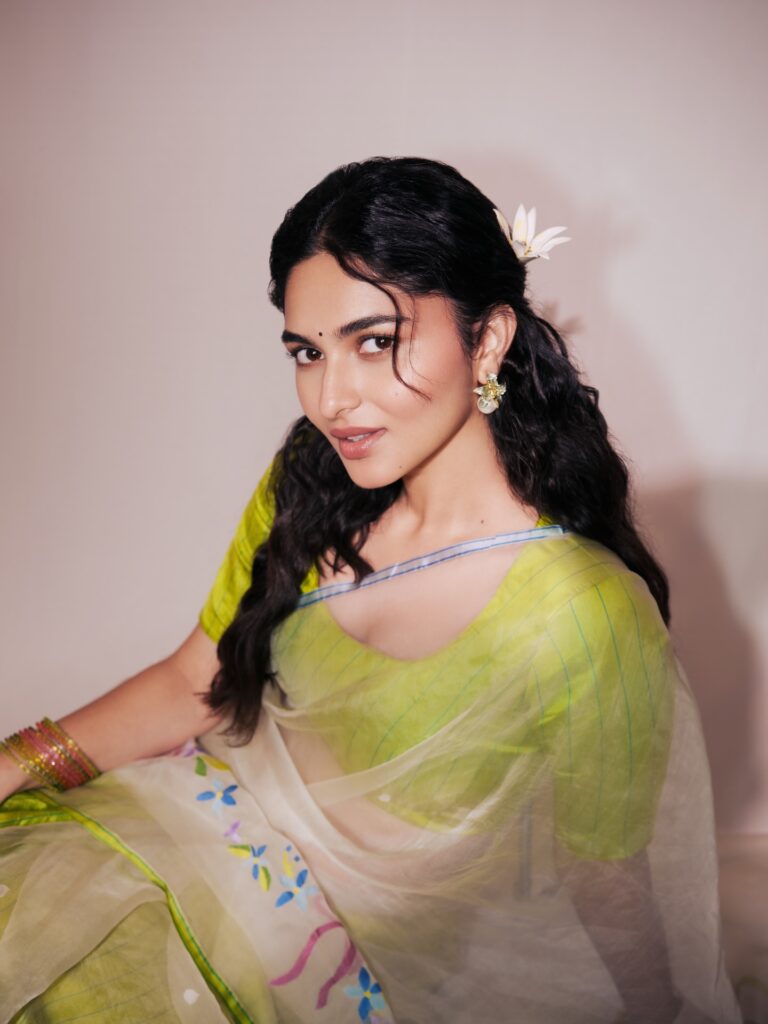
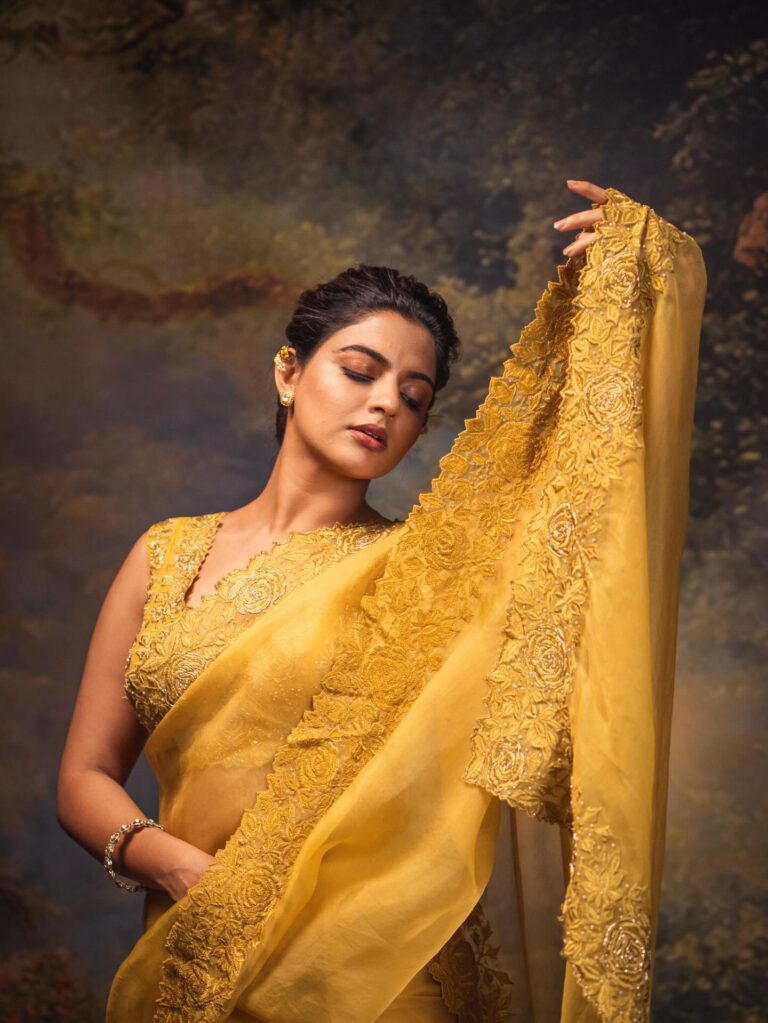
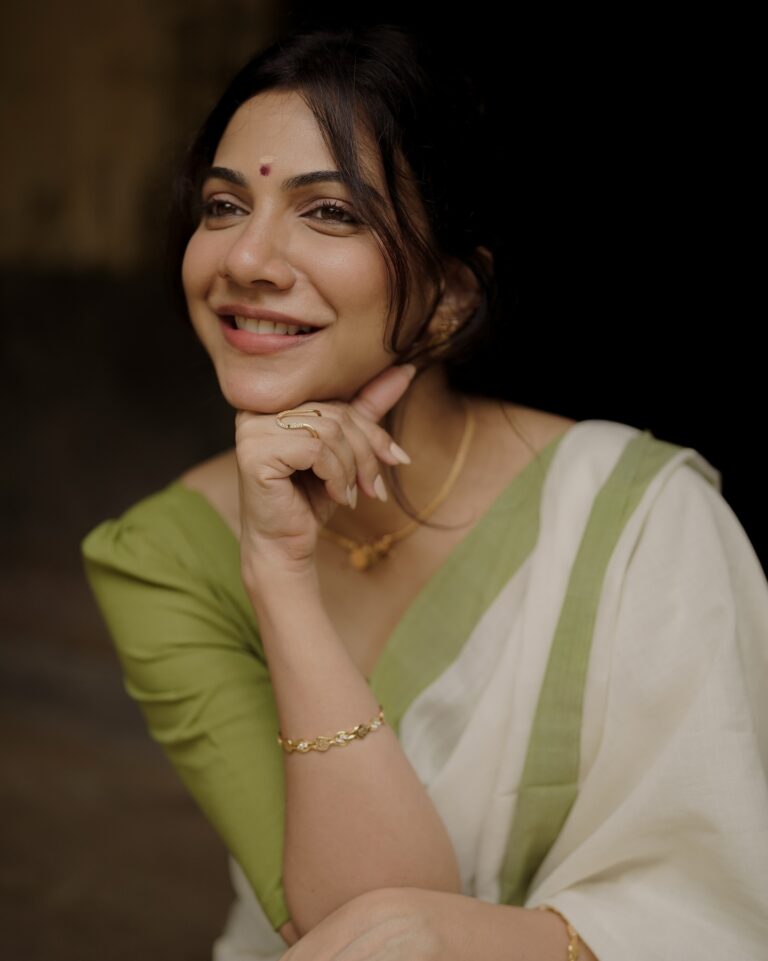
Festivals like Poila Baisakh and Bihu are not just about food, music, and new beginnings. They are about dressing up in a way that feels rooted, joyful, and full of cultural pride. And honestly, nothing captures that festive mood better than a beautifully draped saree.
If you are planning your festive look this year, the drape you choose can completely change the vibe. Whether you want to stay traditional or try something playful, there are plenty of options to explore.
Let’s talk about the drapes that truly belong to these festivals, along with a few creative ones you can experiment with.
For Poila Baisakh: Celebrate with Classic Bengali Elegance
Poila Baisakh, the Bengali New Year, is almost synonymous with the iconic red and white saree. The look is timeless, powerful, and instantly festive.

Influencer Archee Pal in IndyVogue Sarees
1. The Traditional Bengali (Atpoure) Drape
If there is one drape that defines Poila Baisakh, this is it.
The Atpoure drape is the classic Bengali style that many of us associate with Durga Puja and New Year celebrations. It has a distinctive look where the pallu is brought from the back to the front and draped over both shoulders.
What makes this drape special is how relaxed yet regal it feels. It allows movement and adds a certain dramatic charm when you walk. Pair it with a red bindi, kohl-lined eyes, and fresh jasmine flowers, and you are instantly festival-ready.
This drape works beautifully with:
-
Red and white cotton sarees
-
Tant sarees
-
Jamdani sarees
It is traditional, yes, but never outdated.

2. Bengali Drape with a Belt
If you want to keep the tradition but add a modern twist, try the Atpoure drape with a slim belt.
This small styling addition makes the saree look structured and youthful. It also keeps the pleats in place, which is helpful if you plan to move around a lot during celebrations.
Choose:
-
A metallic belt for a festive look
-
A fabric belt in matching tones for a softer feel
This is perfect for younger wearers who want tradition without looking overly formal.

3. The Classic Nivi Drape for Comfort
Not everyone feels confident managing the Atpoure drape, and that is completely fine.
The Nivi drape, which most of us are already familiar with, is a comfortable alternative. It is neat, practical, and works well if you have a long day ahead filled with visits, photos, and meals.
To make it festive:
-
Choose sarees with bold red borders
-
Let the pallu fall freely for a graceful look
-
Add traditional gold jewelry
Sometimes simplicity is the strongest style statement.
Read More: Not 1 But 7 Saree Pallu Draping Styles You Will Love to Try – IndyVogue
For Bihu: Grace Meets Playfulness
Bihu in Assam is lively, energetic, and full of rhythm. The attire reflects that same joy and movement.
Traditionally, the Mekhela Chador is worn instead of a saree. But if you are wearing a saree for Bihu celebrations, there are ways to capture the spirit of the festival beautifully.

4. The Traditional Mekhela Chador Style
If you have access to an authentic Mekhela Chador, this is the most culturally accurate choice for Bihu.
It consists of:
-
A bottom wrap called Mekhela
-
A top drape called a Chador
The look is elegant yet practical, especially for festive dancing like Bihu Naas.
Look for:
-
Cream or golden base fabrics
-
Red woven motifs
-
Traditional Assamese patterns
This style celebrates heritage most authentically.
5. Assamese-Inspired Saree Drape
If you are wearing a saree but want to reflect Assamese tradition, try draping your saree in a way that resembles the Mekhela Chador silhouette.
Use the pallu like a Chador by:
-
Pleating it neatly
-
Draping it across the front
-
Letting it sit firmly on the shoulder
This style looks graceful and structured, making it ideal for cultural gatherings.

Source: Tia Bhuva
6. The Half-Pleated Festival Drape
Festivals like Bihu involve movement, music, and sometimes dancing. A half-pleated drape allows more flexibility while still looking festive.
This style reduces bulk in the front and makes walking easier. It also creates a youthful, energetic look that suits the lively mood of Bihu.
Choose fabrics like:
-
Silk blends
-
Cotton silk
-
Lightweight handlooms
Comfort matters when celebrations last all day.
Final Thoughts: Tradition Is a Starting Point, Not a Limitation
Festive draping is not about perfection. It is about expression.
Whether you choose the classic Bengali Atpoure, the authentic Mekhela Chador, or a comfortable Nivi drape, what matters most is how confident you feel wearing it.
Poila Baisakh and Bihu are celebrations of renewal, identity, and joy. Your drape should reflect that energy. Try something traditional, experiment with a twist, and most importantly, wear your saree with pride.
Because festivals are not just about how you look. They are about how you feel walking into the new year wrapped in culture and confidence.
About the Author