Are Black Sarees Bad Luck or Bold Fashion? Let’s Talk About It.
Let’s get one thing straight — black is not a curse. It’s a color. A powerful, unapologetic, timeless color. So why is it that in many Indian households, black sarees are still met with furrowed brows, whispered warnings, or outright bans at weddings, poojas, and festivals?
“Don’t wear black to a wedding.”
“Black brings bad luck.”
“It attracts negative energy.”
Sound familiar? It’s 2025, and women still hear these lines — especially when reaching for a black saree. But here’s the truth: black is not unlucky — it’s unstoppable.
The Taboo Behind the Thread
Traditionally, black in Indian culture has been associated with sorrow, mourning, and negativity. It’s considered inauspicious for spiritual ceremonies or moments of celebration. The superstition goes even deeper — black is thought to absorb the nazar, or evil eye. So, wearing it during life’s most sacred events is seen as an invitation for misfortune.
Because of this, black sarees are often sidelined during weddings, temple visits, and festivals. They’re replaced with reds, yellows, whites — anything but black.
But here’s the kicker — is this tradition or just fear dressed up as culture?
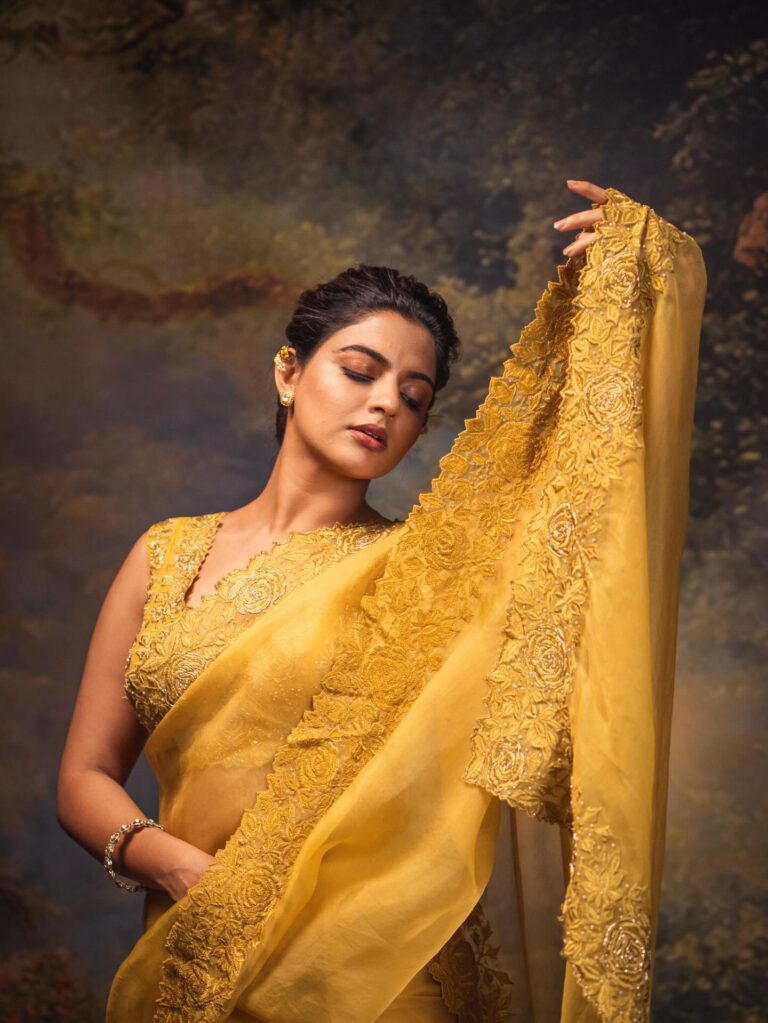
Because organza doesn’t flow. It commands.
The Maharashtra Exception: A Tradition That Breaks the Norm
Let’s look at Makar Sankranti in Maharashtra — a festival that marks new beginnings. Guess what women traditionally wear on this day? Black. Yes, black. Not red, not gold — black.
Why? Because during this time of seasonal change, black is said to absorb heat and protect the body from winter chills. It’s practical, celebratory, and completely accepted. No one cries bad luck here. So why the double standards elsewhere?
The truth is, black sarees aren’t taboo — they’re misunderstood.

Black: The Power Color
Let’s not ignore the facts:
- Black is slimming, sleek, and elegant.
- It suits every skin tone.
- It empowers the wearer with confidence and mystery.
- Black makes a statement without saying a word.
When you wear a black saree, you don’t blend in — you take up space. You become impossible to ignore. Maybe that’s what really scares people — not the color, but the power it represents.
The Pros and the So-Called ‘Cons’
✅ Pros:
- Universally flattering
- Works for day or night events
- Modern and traditional fusion-ready
- Makes any jewelry pop — silver, gold, pearls
- Perfect for minimalists and maximalists alike
⛔ Supposed Cons:
- “Inauspicious” (Translation: People are still scared of bold choices)
- Associated with funerals (So is white, but no one bans that at weddings)
- “Attracts nazar” (Or maybe just attention)
Let’s be honest — the only thing black attracts is admiration. And maybe a little envy.
It’s Time to Break the Black Barrier
Ladies, if you’ve ever been told to put that black saree back in the closet, don’t listen. Wear it to the wedding. Rock it at the temple. Light that diya in black silk. Culture evolves. Fashion evolves. So should the mindsets.
Every time you wear black — especially when you’ve been told not to — you’re doing more than making a fashion statement. You’re standing your ground. You’re rewriting the rules. You’re saying: “I decide what’s lucky for me.”
And that? That’s real power.
Wrapping Up
So, are black sarees bad luck or bold fashion?
They’re bold. They’re brave. And they’re bloody beautiful.
Wear the black saree. Drape it like armor. Walk into that room like you own it. Because you do.
About the author
Sumana Bhattacharya completed her Masters in Economics from the University of Calcutta & was working with the Department of Education, Govt. of West Bengal to provide training to the teachers in Government Schools. She moved to USA in 2005 after getting married & is the mother of 2 kids. She is the one that drives IndyVogue every day, every hour, every minute and every second. Salute to her and her undying spirit.
About the Author